
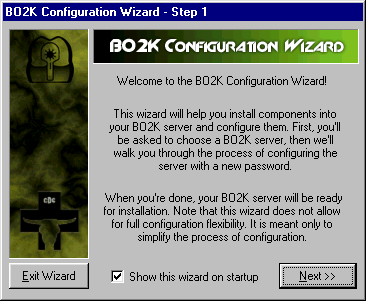
Back Orifice 2000: The Infamous Remote Administration Tool That Became a Hacker Favorite
Back Orifice 2000 changed the landscape of cyber security from the moment of its release, quickly gaining notoriety as a powerful remote administration tool that was also a hacker favorite. Understanding the impact of Back Orifice 2000 is crucial for anyone concerned with digital threats, security researchers, IT professionals, and small businesses striving to secure their networks in the face of constantly evolving malware techniques.
Why Back Orifice 2000 Mattered in Cyber Security
Back Orifice 2000 (often abbreviated as BO2K) emerged during a period when remote administration was essential for legitimate IT management—but it also revealed how these tools could be weaponized by cybercriminals. Developed by the hacker collective Cult of the Dead Cow and released in 1999, Back Orifice 2000 was intended to highlight serious flaws in Windows security. Instead, it became one of the most infamous hacking tools ever, setting new standards (and fears) around remote system compromise.
Understanding Back Orifice 2000: Features and Functions
What is Back Orifice 2000?
Back Orifice 2000 is a remote access Trojan (RAT) that enables users to control Windows computers remotely. Designed for both legitimate administration and unauthorized access, it could be installed and operated without the user’s knowledge, allowing complete control of the compromised device.
Key Features That Made It a Hacker’s Dream Tool
Stealthy Installation Techniques
BO2K could be disguised as legitimate software or hidden in seemingly harmless email attachments. It ran silently in the background, evading detection by most antivirus tools of its era.
Comprehensive Remote Control
Attackers could use Back Orifice 2000 to view the desktop, log keystrokes, access and modify files, run programs, and even record audio from a computer’s microphone—all from a remote location.
Flexible Command and Control
BO2K featured encrypted communications between the attacker and the infected computer, making it much harder for network defenders to intercept or block its traffic.
Why Was Back Orifice 2000 So Popular Among Hackers?
Low Barrier to Entry
Back Orifice 2000 had a user-friendly graphical interface, making it accessible to novice hackers as well as seasoned professionals. This democratization contributed to the proliferation of remote access attacks.
Open Source Availability
The Cult of the Dead Cow released the source code to the public. This allowed attackers to modify and customize the tool, as well as bypass detection mechanisms that targeted default versions.
Notorious Reputation and Community
Being associated with a legendary hacker group and widespread media coverage only increased its cult status within the cyber criminal underground.
The Security Lessons of Back Orifice 2000
How BO2K Changed IT Security Strategies
Spotlighting Windows Vulnerabilities
Back Orifice 2000 exploited fundamental weaknesses in Windows security, particularly around unchecked remote access and insufficient system privileges. Its release forced Microsoft and IT departments worldwide to rethink their approach to endpoint security.
Driving Antivirus and Firewall Developments
As BO2K outbreaks became commonplace, antivirus vendors and firewall developers hurried to create and distribute detection signatures. The arms race between attackers and defenders arguably went mainstream due to threats like BO2K.
Raising Security Awareness
The sheer publicity around Back Orifice 2000 prompted organizations to begin security training, policy development, and defense-in-depth measures—even for environments previously considered low-risk.
Real-World Examples: How Back Orifice 2000 Was Used
High-Profile Breaches
Several early cybercrime cases featured Back Orifice 2000 as the primary tool for infiltrating company networks, stealing proprietary data, or planting additional malware.
Script Kiddie Attacks
Because the tool was so easy to acquire and operate, even inexperienced hackers—often dubbed “script kiddies”—could compromise home users, small businesses, or school networks with alarming ease.
Lessons for Today: Preventing Modern RAT Attacks
Robust Endpoint Protection
Comprehensive antivirus and anti-malware solutions are vital. Modern endpoint protection not only detects unauthorized tools like BO2K, but also analyzes behavior to identify suspicious remote activity.
User Training and Awareness
Teach employees and users to avoid clicking on suspicious links or attachments. Often, the weakest link in security is social engineering, the very tactic that made Back Orifice 2000 effective in the first place.
Regular Update and Patch Routines
Keeping operating systems and applications updated closes the vulnerabilities exploited by outdated remote administration tools. Patch management is non-negotiable for modern cyber defense.
Network Segmentation and Firewall Rules
Isolate critical systems and block unnecessary ports to limit the potential for remote access tools to move laterally or call home to attackers.
FAQ: All You Need to Know About Back Orifice 2000
What is Back Orifice 2000?
Back Orifice 2000 is a remote administration tool (RAT) that allows full remote control of Windows PCs, widely used by both IT administrators (for legitimate purposes) and hackers (for malicious activity).
How did Back Orifice 2000 get on computers?
BO2K typically spread through email attachments, infected downloads, or network vulnerabilities, often disguised as harmless software.
Why is Back Orifice 2000 considered a security threat?
Its stealthy installation, extensive control capabilities, and ability to bypass early antivirus solutions made it highly effective for cybercriminals to compromise and control victims’ computers remotely.
Can modern antivirus software detect Back Orifice 2000?
Yes, most current antivirus programs can detect and remove Back Orifice 2000, but attackers have since developed more sophisticated variants and new tools.
What can I do to protect my devices from tools like Back Orifice 2000?
Use reputable security software, keep systems patched, avoid downloading unknown files, and educate users about common phishing tactics.
Is Back Orifice 2000 still used today?
While the original tool is outdated, its techniques laid the groundwork for modern remote access Trojans, which continue to threaten individuals and organizations.
Practical Takeaway: Stay Ahead of Remote Threats
Back Orifice 2000 serves as a cautionary tale about the double-edged sword of remote administration tools. While essential for IT management, these applications can become serious liabilities if misused or left unprotected. By staying informed, maintaining robust security practices, and promoting awareness across your team or organization, you can defend against the next generation of threats inspired by notorious tools like BO2K. Remain vigilant—remote access is powerful, but so is your ability to secure it.