
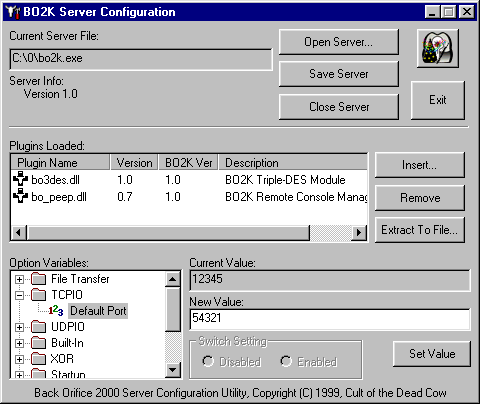
Back Orifice 2000: A Historical Look at One of the Earliest Windows Backdoors
Back Orifice 2000 is one of the earliest and most notorious Windows backdoors, and studying its evolution offers vital lessons for today’s cyber security professionals, researchers, and anyone concerned with safeguarding personal or business data. Often abbreviated as BO2K, this tool wasn’t merely a piece of malicious code—it was a pioneer in demonstrating both the potential and the risk of remote administration tools when misused. Its history continues to shape how the cyber security community approaches threats, remote access, and system vulnerabilities.
The Origins and Impact of Back Orifice 2000
A Tool Born from Protest and Provocation
Back Orifice 2000 was released in July 1999 by the hacker collective Cult of the Dead Cow (cDc). Designed as a successor to the original Back Orifice, BO2K exposed the security shortcomings in Microsoft’s Windows operating systems. While its creators claimed their goal was to force Microsoft and the public to take security issues more seriously, it didn’t take long for malicious actors to exploit the software for cybercrime.
Key Features That Alarmed the World
BO2K functioned as a remote administration tool (RAT), allowing an attacker to control a Windows machine silently from anywhere in the world. Capabilities included:
– File Transfer & Manipulation: Attackers could upload, download, delete, or modify files.
– Keystroke Logging: Capturing everything the user typed, including sensitive passwords.
– Remote Command Execution: Running applications or commands on the victim’s device.
– Stealth Operation: It could hide its presence, making detection by victims or antivirus tools difficult.
These features made Back Orifice 2000 both a red flag for security gaps and a dangerous weapon in the hands of cybercriminals.
How BO2K Exploited Windows Weaknesses
Exploiting Open Network Ports
One of the primary weaknesses BO2K exploited was the lack of default security controls around network ports on Windows 9x and NT systems. Attackers would often trick users into running the BO2K server program, which would then listen unobtrusively on a network port, waiting for commands from a remote client.
Lack of User Awareness and Social Engineering
BO2K’s success was also rooted in basic social engineering tricks. Attackers commonly disguised the server installer as a harmless attachment or software update. The lack of proper security training meant users frequently ran unknown programs, unwittingly giving attackers control.
Back Orifice 2000’s Influence on Cyber Security Evolution
Wake-up Call for Microsoft and the Security Industry
The global uproar surrounding Back Orifice 2000 forced Microsoft and other software vendors to reconsider the security of their operating systems. It led to the implementation of improved user privilege models, increased focus on secure default configurations, and modern endpoint protection strategies.
The Dual-Use Debate: Administration Tool vs. Malware
BO2K’s source code was released to the public, sparking debate over the dual-use of security tools. While network administrators could leverage BO2K for legitimate remote management (with user consent), its misuse blurred the line between beneficial tool and malware—an ethical and legal dilemma still relevant today.
Lessons from BO2K Still Relevant for Modern Cyber Security
The Dangers of Remote Access Tools
Modern Remote Access Trojans (RATs) like njRAT and DarkComet follow in BO2K’s footsteps, constantly challenging defenders to distinguish legitimate from malicious remote administration. Ensuring proper authentication, using strong network segmentation, and employing least-privilege principles are more critical than ever.
The Role of User Training and Awareness
BO2K’s initial spread showed that technology alone cannot solve security problems. Educating users about suspicious emails, downloads, and executable files is still a cornerstone of cyber security.
Advances in Detection and Incident Response
Antivirus software and intrusion detection systems were generally unprepared for stealthy threats like BO2K in the late ’90s. Today’s solutions are far more sophisticated but must constantly evolve to detect new variants and hacking methods inspired by historic threats like Back Orifice 2000.
Protecting Your Systems Against Backdoor Threats
Implement Robust Endpoint Security
Install and regularly update reputable antivirus and anti-malware solutions capable of detecting remote access threats.
Restrict and Monitor Remote Administration
Unless absolutely necessary, disable unnecessary remote administration services. Monitor for unusual network traffic and system events that could indicate unauthorized access.
Keep Systems and Software Up to Date
Apply patches as soon as they become available to close known vulnerabilities that backdoors like BO2K frequently exploit.
Foster Human Firewalls
Conduct regular training for staff and family members on cyber security best practices. Teach how to recognize phishing attempts and suspicious files.
FAQs About Back Orifice 2000
Q1: What is Back Orifice 2000, and how did it work?
A1: Back Orifice 2000 is a remote administration tool originally used to control Windows machines without the user’s knowledge, allowing file access, keystroke logging, and command execution remotely.
Q2: Was BO2K considered malware or a legitimate tool?
A2: BO2K is technically a legitimate remote administration tool, but since it was commonly installed without consent and used for malicious purposes, it’s classified as malware in most contexts.
Q3: Can Back Orifice 2000 still infect modern Windows systems?
A3: Modern Windows operating systems have security measures that typically block or alert users about BO2K-style threats, but similar modern malware with advanced techniques remains a risk.
Q4: How could someone have prevented BO2K infections in the late 1990s?
A4: Practicing careful download habits, using updated antivirus software, and avoiding running unknown executables were effective prevention methods then—advice still relevant today.
Q5: What impact did BO2K have on Microsoft’s security approach?
A5: BO2K’s infamy pushed Microsoft to prioritize security, leading to improvements in user permissions, security updates, and network protection features in later Windows versions.
Q6: Is it illegal to use or distribute tools like Back Orifice 2000 today?
A6: Using or distributing such tools for unauthorized access is illegal in most jurisdictions, though similar tools may have legitimate uses with proper consent and documentation.
Key Takeaway
Back Orifice 2000 is a significant chapter in cyber security history, teaching us about the dangers of lax security, the importance of ongoing education, and the ever-present threat posed by remote administration tools. Whether you’re a consumer, researcher, or small business owner, staying informed and vigilant about remote access and backdoor threats—historic or modern—remains crucial for robust digital protection.